Anthropic just put Claude inside Slack as something you can @-mention. Claude Tag adds Claude as a team member with access to the channels and tools you pick, so you tag it into a thread, hand off a task, and go do something else. The announcement pulled 20 million views in its first week.
The interface is the easy part. Whether async delegation in a chat channel is actually useful comes down to something the launch clip doesn't show: what happens between the tag and the result.
Delegation is hard mode for agents
Tagging Claude in Slack and walking away is the most demanding way to run an agent. No human is watching the tool calls, there's no IDE to catch a bad edit, no chance to correct a wrong turn three steps in. You get a result in the thread, or you get a mess, and you find out later.
That's exactly the regime where reliability either collapses or holds based on the loop around the model. Spotify's chief architect, Niklas Gustavsson, put a number on it: once they implemented loops in their agent workflow, the success rate went from 20-30% to 80%. [1] Same models. The difference was the scaffolding that lets an agent check its own work and retry.
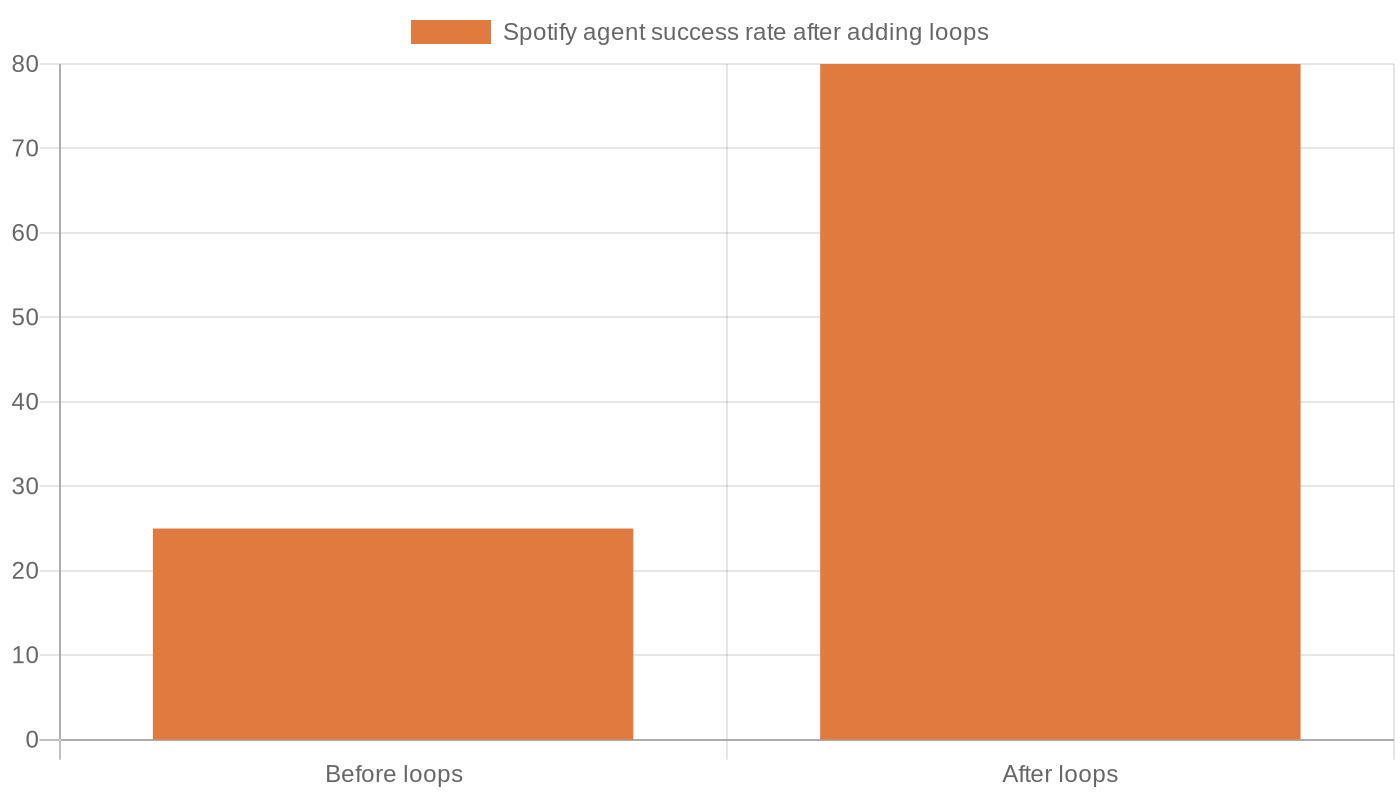
Boris Cherny, who created Claude Code, framed it bluntly in the same conversation: the model matters less than the loop you build around it. Spotify now has 73% of its code written by AI, most of it merged without a human ever reviewing it. That number only works because the loop is doing the verification a human would otherwise do.
What the tag hides
A Slack mention is a beautiful abstraction, and a risky one. It collapses planning, tool use, verification, and retry into a single chat bubble. For a question, that's fine. For a delegated task with side effects — filing a ticket, editing a doc, hitting an API through one of those "tools you choose" — the abstraction hides the exact part that determines whether the output is right.

So my read is this. Claude Tag is a distribution play, and a smart one. Slack is where work actually gets assigned, so a taggable agent meets teams where delegation already happens, with no new tool to adopt. That solves discovery. It does not solve correctness, and the two are easy to confuse when the demo looks clean.
The bet Anthropic is making is that a model good enough at single-shot tasks plus a familiar surface beats a more capable agent that nobody remembers to open. For low-stakes work in a channel — summarize this thread, draft a reply, pull a status — that bet is probably right. For anything that writes to a system of record, I'd want to see the loop before I trusted the thread.
Where this fits the quarter
Claude Tag isn't isolated. Claude in Microsoft Foundry went generally available on Azure this month with Opus 4.8 and Haiku 4.5, plus Azure authentication and billing. [2] Both moves point the same direction: get Claude into the environments where teams already work rather than asking them to come to a standalone app. The marketing layer is keeping pace, with AI educators pushing "build and automate anything" Claude courses to audiences in the tens of thousands. [3] Distribution is clearly the theme. Reliability is the part still being assumed.
Where this leaves me
If you're rolling Claude Tag into a workspace, treat the convenience and the correctness as separate questions.
- Start it read-mostly. Give it channel access and read tools before write tools, and watch a week of delegated tasks before you let it touch a system of record.
- Scope the "tools you choose" tightly. The blast radius of a wrong action equals the permissions you granted, and in an async thread nobody is there to hit cancel.
- Build the loop yourself if the tag doesn't expose one. Have Claude post its plan and a self-check in the thread before acting, so a human can veto. That's a crude version of what took Spotify from 20-30% to 80%.
The thing to watch over the next few releases isn't more surfaces. It's whether Anthropic shows verification and retry behind the tag. Until then, Claude Tag is a great way to assign work and an unproven way to trust the result.
Sources
Primary source: Claude (@claudeai) on X
- Tweet by @AnatoliKopadze — @AnatoliKopadze · community
- Tweet by @claudeai — @claudeai · community
- Tweet by @ai_rohitt — @ai_rohitt · community